
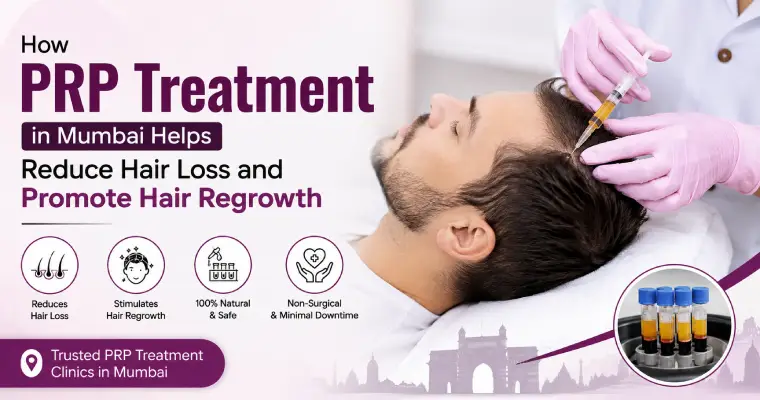
If you’ve spent any time researching hair fall solutions, you’ve probably come across PRP Treatment in Mumbai more than once. It’s become one of the most talked-about options for people dealing with thinning hair — and unlike some trends, this one is actually backed by real clinical research.
But what does PRP actually do, and is it worth the cost and time commitment? This guide walks through exactly how the procedure works, what results you can realistically expect, and how it compares to other treatments.
What Is PRP Therapy, Exactly?
PRP stands for Platelet-Rich Plasma. In simple terms, it’s a treatment that uses a concentrated portion of your own blood to stimulate healing and regeneration in targeted areas of the body.
Blood naturally contains platelets, which play a key role in healing and tissue repair. Platelet rich plasma therapy in Mumbai clinics involves drawing a small blood sample, spinning it in a centrifuge to separate out the platelet-rich portion, and then injecting that concentrated plasma back into the treatment area.
For hair loss specifically, the growth factors in PRP are believed to stimulate dormant hair follicles, improve blood supply to the scalp, and extend the active growth phase of existing hair.
Why PRP Has Become Popular for Hair Regrowth
Hair regrowth treatment in Mumbai has evolved quite a bit over the past decade, moving away from purely topical solutions toward more targeted, biological approaches. PRP fits into this shift because it works with the body’s own healing mechanisms rather than introducing external chemicals.
A few reasons it’s gained traction:
- It’s minimally invasive compared to surgical options like hair transplants
- Since it uses your own blood, the risk of allergic reaction is very low
- It can be combined with other treatments, including Minoxidil or oral medication, for better results
- Sessions are relatively quick, usually 30 to 45 minutes
That said, PRP works best for people in the early to moderate stages of hair thinning. Completely bald areas with no active follicles typically won’t respond, since PRP stimulates existing follicles rather than creating new ones.
The PRP Procedure: Step by Step
Understanding the PRP procedure steps helps set realistic expectations before your first session.
- Blood draw — A small amount of blood, similar to a standard lab test, is drawn from your arm.
- Centrifugation — The blood is placed in a centrifuge and spun at high speed to separate platelet-rich plasma from red blood cells and other components.
- Scalp preparation — A numbing cream is often applied to the scalp to minimize discomfort during injections.
- Injection — The concentrated plasma is injected into targeted areas of the scalp using fine needles, focusing on regions with thinning or reduced density.
- Aftercare instructions — You’ll typically be advised to avoid washing your hair for a few hours and skip strenuous activity for the rest of the day.
The entire process, from blood draw to completion, usually takes under an hour, and most people return to normal activities the same day.
What Is PRP Recovery Time Really Like?
One of the appealing aspects of PRP is how minimal the downtime actually is compared to surgical alternatives.
Mild scalp tenderness, slight redness, or minor swelling at injection sites is common immediately after treatment, but this typically resolves within 24 to 48 hours. There’s no need for bandages or extended rest, and most patients can return to work the same day or the next morning.
A few practical aftercare tips that support faster recovery:
- Avoid hair washing for at least 4 to 6 hours after the session
- Skip intense workouts or activities causing heavy sweating for 24 hours
- Avoid direct sun exposure on the scalp for a day or two
- Don’t apply hair styling products immediately after treatment
Because PRP recovery time is so short, many people schedule sessions during lunch breaks or between other commitments without needing to plan around extended downtime.
How Many Sessions Are Needed, and When Will You See Results?
PRP isn’t a one-time fix. Most treatment plans involve an initial series of four to six sessions, spaced three to four weeks apart, followed by maintenance sessions every four to six months.
Visible improvement, such as reduced shedding and finer new hair growth, is usually noticeable after the third or fourth session, though full results build up gradually over several months. Hair growth is a slow biological process, so patience matters more than people often expect going in.
Beyond Hair: Other Common Uses of PRP
While hair regrowth is the most common reason people search for PRP treatment in Mumbai, the therapy has broader medical and cosmetic applications worth knowing about.
| PRP Application | Purpose | Typical Session Frequency |
| Hair Regrowth | Stimulates thinning follicles | 4–6 sessions, then maintenance |
| Skin Tightening | Boosts collagen production | 3–4 sessions |
| Joint Injections | Reduces inflammation, supports tissue repair | Varies by condition |
PRP for skin tightening in Mumbai works on a similar principle — the growth factors stimulate collagen production, which can improve skin texture and firmness over time, often used for early signs of aging or post-acne scarring.
PRP injections for joints in Mumbai are also used in orthopedic settings, particularly for conditions like mild osteoarthritis or tendon injuries, where the treatment supports the body’s natural repair process. This application requires a different specialist and treatment protocol compared to hair or skin PRP.
Is PRP Right for You? What to Discuss With Your Specialist
Before booking a session, it helps to have a proper consultation rather than jumping straight into treatment.
Questions worth asking your specialist:
- Am I a good candidate based on my stage of hair thinning?
- What results are realistic for my specific case?
- How many sessions will I likely need before seeing improvement?
- Should PRP be combined with other treatments for better results?
- What certifications or training does the clinic have for administering PRP?
A trustworthy clinic will give honest, specific answers rather than vague reassurances or unrealistic promises of instant results.
Conclusion
PRP treatment in Mumbai has earned its popularity for good reason — it’s a low-risk, minimally invasive option that works with your body’s natural healing process to support hair regrowth. It’s not an overnight fix, and it works best when started early, but consistent sessions combined with realistic expectations often deliver noticeable improvement over several months.
If thinning hair has been bothering you, the best next step is a consultation with a qualified specialist who can assess whether PRP fits your specific situation. Book an appointment, ask the right questions, and start your treatment plan based on an actual diagnosis rather than guesswork.
Frequently Asked Questions
1. How many PRP sessions are needed to see results for hair fall?
Most people need an initial series of four to six sessions spaced three to four weeks apart, with visible improvement often noticeable around the third or fourth session. After the initial series, maintenance sessions every four to six months help sustain results. Individual timelines vary based on the stage of hair thinning and how the scalp responds to treatment.
2. Is PRP treatment painful?
Most patients describe PRP as mildly uncomfortable rather than painful, especially since numbing cream is typically applied to the scalp before injections. Any discomfort during the procedure is usually brief, and mild tenderness afterward typically resolves within a day or two. Compared to more invasive procedures, PRP is generally well-tolerated.
3. How long does PRP recovery time actually take?
PRP recovery time is minimal, with most people resuming normal activities the same day or the following morning. Mild redness or tenderness at injection sites usually fades within 24 to 48 hours. Unlike surgical procedures, there’s no significant downtime required, making it easy to fit sessions into a regular schedule.
4. Can PRP be combined with other hair loss treatments?
Yes, PRP is often combined with treatments like Minoxidil or oral medication for better overall results, since each works through a different mechanism. Combining a hair regrowth treatment in Mumbai with PRP is common for people with moderate thinning who want a more comprehensive approach. Your specialist can recommend the right combination based on your specific diagnosis.
6. Does PRP work for completely bald areas?
PRP works by stimulating existing, though weakened or dormant, hair follicles, so it’s generally not effective on areas with no active follicles remaining. It tends to work best for early to moderate hair thinning rather than advanced baldness. For more extensive hair loss, a specialist may recommend combining PRP with other treatments or considering options like an FUE hair transplant.